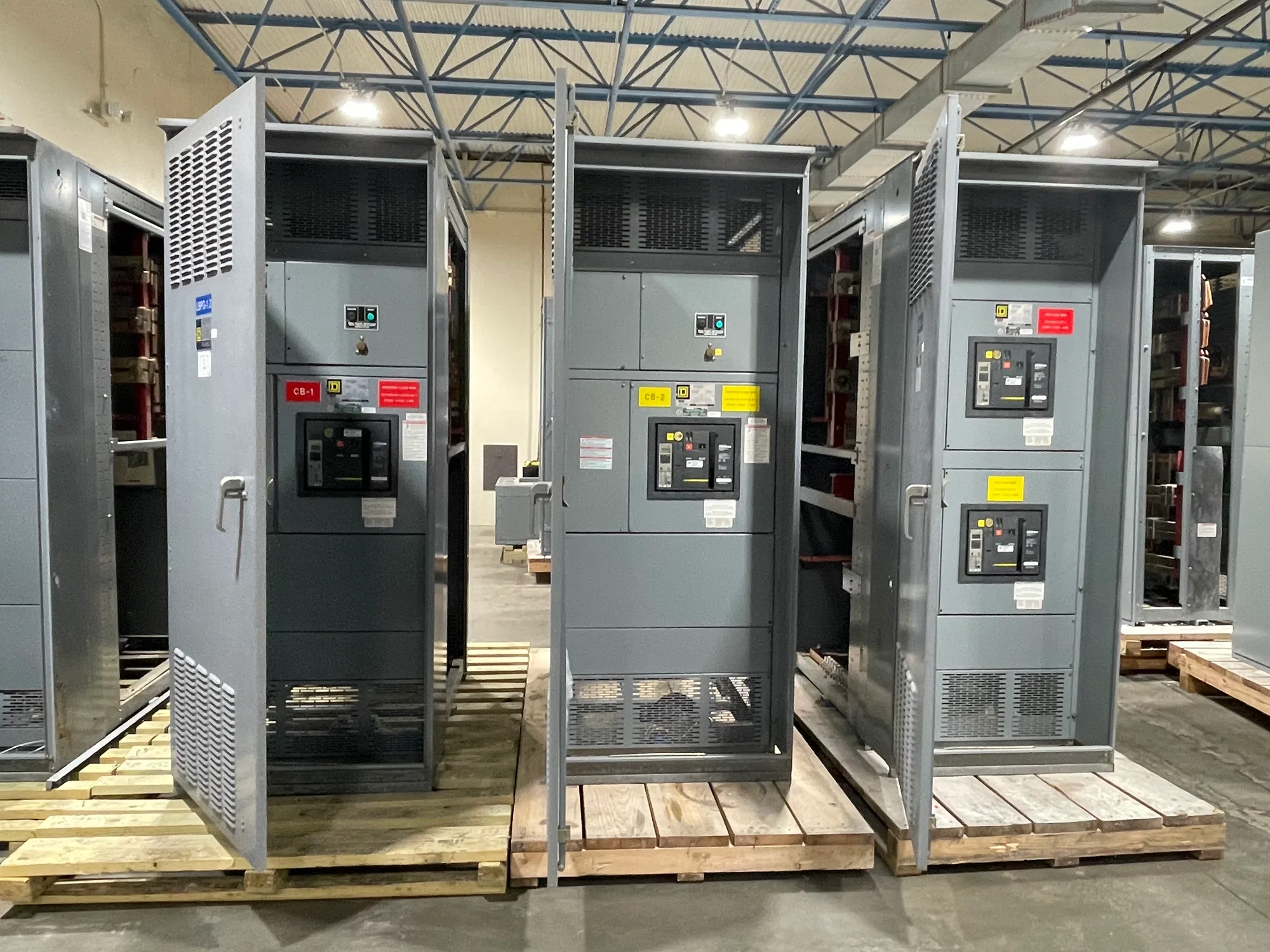
How the Drawout Breaker Changes Access
In drawout metal-clad switchgear, the medium-voltage breaker is a removable element within a defined compartment. This arrangement can allow qualified personnel to move the breaker between connected, test and disconnected positions, subject to the equipment design and operating procedures. It also changes how the lineup must be planned: breaker dimensions, withdrawal direction, lifting or handling method, travel path and available clearance all matter. Consider the room layout as well as the gear itself. A breaker may need space in front of the compartment for movement and a safe location for inspection or storage when withdrawn. Identify whether access is from the front or another specified side, and account for adjacent walls, cable trenches, doors and other equipment. These details are useful early design inputs, not assumptions to leave until installation. The selected arrangement should support the intended operating process while fitting the electrical room and maintenance plan.
Shutters and the Primary Disconnects
When a breaker is withdrawn, shutters are associated with covering the stationary primary disconnects in the compartment. Their purpose and operating sequence should be understood as part of the equipment’s isolation and access design; shutters are not a substitute for required electrical isolation, verification or safe work practices. Project teams should confirm how the shutters move, what positions they cover, and whether the intended arrangement addresses access to energized parts under the applicable design and operating procedures. The interface between the breaker’s primary contacts and the stationary disconnects also deserves attention. Contact alignment, engagement and the operating mechanism’s travel are related to the breaker’s fit and function, so the specified breaker and compartment must be designed as a compatible system. Discuss any special interlocking, keying or operating requirements during specification. Qualified professionals determine protection, ratings, applicable codes and safe work procedures for each project; the equipment arrangement should be reviewed in that context rather than treated as a stand-alone safety measure.
| System | Voltage, phase, current and available fault current |
|---|---|
| Configuration | Lineup, protection, controls and enclosure as specified |
| Compliance | Applicable standards and listing confirmed for the assembly |
| Delivery | California and nationwide; schedule confirmed by quote |
Compartment Boundaries and Service Access
Metal-clad construction divides the lineup into defined compartments, but the details of barriers, doors and access points depend on the specified design. Map the intended access for the breaker compartment and identify which other areas require inspection or service, such as cable, bus or instrument compartments. Clarify whether doors are hinged or removable, how access is controlled, and which components may be reached from the front or rear. Those choices can affect room clearances, cable routing, maintenance tasks and the sequence for taking equipment out of service. Avoid assuming that access to one compartment implies access to another, or that every internal component is intended for energized inspection. Provide the project one-line diagram, system voltage, available fault information, feeder arrangement and operational requirements so the builder can assess the intended configuration. Identify environmental conditions and any constraints on the electrical room. A clear access plan helps align the physical layout with installation and maintenance needs before drawings are finalized.
Ratings, Standards and Operating Requirements
A drawout breaker’s voltage class, continuous-current requirement, interrupting duty and the lineup’s withstand requirements are project-specific design inputs. These values must be evaluated together with the power system, protection scheme, connected load and anticipated operating conditions. Share the latest one-line diagram and fault-study information when available, and identify the source and date of the study so assumptions can be checked. Also describe switching frequency, environmental conditions, control power, metering and communications needs, and any required interlocks. For medium-voltage equipment, identify the standards and codes applicable to the specific equipment and project, then verify those requirements during design review; do not assume that a standard reference establishes a third-party listing or approval. Qualified electrical professionals should determine protection settings, equipment ratings and applicable code requirements. If drawings or specifications call out a particular breaker interface or replacement constraint, provide those documents for review. Resolving these inputs together reduces the risk of mismatched components or late changes to compartment dimensions.
Plan the Lineup and Review the Details
Before requesting a proposal for new drawout metal-clad switchgear, gather the single-line diagram, load and fault data, equipment schedule, site layout and applicable specifications. Note the required lineup sequence, incoming and feeder locations, cable entry, control scheme, metering, communications and anticipated future provisions. Describe how operators will withdraw, test and return breakers, including handling equipment and clearance limitations. Flag unusual door access, restricted room dimensions or site conditions that may affect delivery and installation. A drawing review should reconcile the breaker and compartment interfaces, shutters, access requirements, electrical ratings and protection coordination with the project documents. Record open items instead of relying on informal assumptions, and identify who will approve final drawings and settings. Switchgear Builder California builds new equipment in the USA with American components and supplies switchgear to customers in California and nationwide. Schedule-sensitive or expedited options may be considered after project review, but timing depends on scope and confirmation. Share complete requirements early to support a practical, coordinated design discussion.