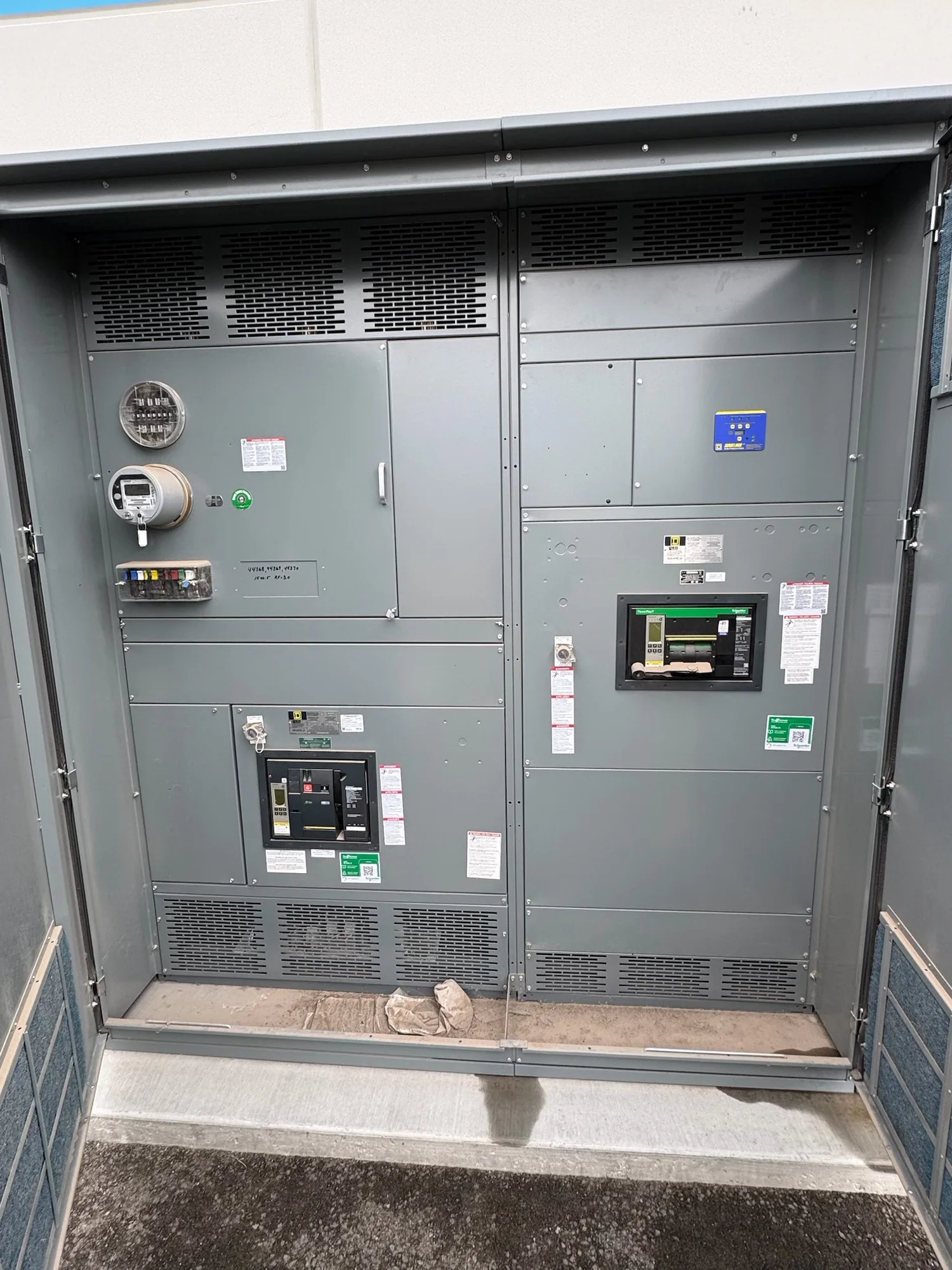
Map the Distribution Around Process Loads
Wastewater facilities bring together loads with different operating patterns: lift-station pumps, process equipment, ventilation, buildings, and controls may share a service while demanding different feeder arrangements. Begin by documenting the incoming source, voltage, available fault current, grounding approach, and existing one-line diagram, then identify each load’s rating, starting method, duty cycle, and criticality. This helps distinguish main service distribution from downstream process feeders and clarifies which loads require dedicated circuits or coordinated protection. Pumping equipment can impose substantial starting current or frequent switching, so confirm motor data and the intended control scheme rather than sizing around horsepower alone. Consider how a fault or planned maintenance will affect operations: separating essential process loads from noncritical building circuits can support a more practical isolation strategy. Qualified professionals must determine equipment ratings, protection, and applicable codes for the specific installation.
Account for Pumps and Operating Cycles
Pump stations and treatment processes rarely operate as a single, steady load. Lead-lag sequencing, variable-frequency drives, soft starters, bypass arrangements, and standby pumps can all affect feeder requirements and the way the distribution system responds during transitions. Provide the switchboard planner with motor nameplate information, control diagrams, drive input data, and details about simultaneous operation. Also identify whether pumps are expected to restart automatically after an outage and what upstream or downstream controls govern that sequence. These details inform circuit allocation, protective-device coordination, and the space and access needed for maintainable installation. If a future pump upgrade is likely, record the anticipated motor and control changes as design assumptions, not as confirmed capacity. A qualified electrical engineer should evaluate starting conditions, short-circuit and coordination studies, and operational consequences. Early review reduces the risk of discovering too late that a proposed feeder arrangement conflicts with the process sequence.
| System | Voltage, phase, current and available fault current |
|---|---|
| Configuration | Lineup, protection, controls and enclosure as specified |
| Compliance | Applicable standards and listing confirmed for the assembly |
| Delivery | California and nationwide; schedule confirmed by quote |
Design for Wet and Corrosive Areas
Moisture, washdown, condensation, corrosive gases, and airborne contaminants can make the installation environment as important as the electrical load. Identify where the switchboard will be located, whether it is indoors or outdoors, the enclosure exposure, ventilation conditions, and nearby chemical or wastewater processes. Clarify applicable environmental and enclosure requirements with the project team; an enclosure designation should be selected for actual exposure and installation, not assumed from the facility type. Where practical, locating distribution equipment outside the most aggressive environment may reduce exposure, but cable routing, voltage drop, access, and fire or process constraints also matter. Document temperature, humidity, washdown practices, and any known corrosion concerns so the design can be reviewed appropriately. Include clearance, working space, door swing, and safe access for inspection and maintenance. Qualified professionals should confirm the applicable codes and installation conditions. Routine inspection and a realistic maintenance plan remain important even when environmental precautions are incorporated.
Plan Standby Power and Source Transfer
Standby power planning should begin with a clear list of loads that must remain available during loss of normal service and the duration or operating scenario they must support. Identify generator or alternate-source characteristics, transfer equipment location, whether loads are shed or sequenced, and how pumps and process controls recover after transfer. Generator capacity cannot be judged only by connected load: motor starting, drive behavior, step loading, and other site loads may affect performance. Provide available generator data and the intended transfer sequence for engineering review. Clarify whether the switchboard is part of the transfer arrangement or receives power from separate transfer equipment; the answer affects one-line documentation, feeder boundaries, and coordination responsibilities. Identify any required interlocks and the approach to preventing unintended paralleling or backfeed, as determined by the project design. Confirm the applicable standards for each equipment type and the specific installation. Do not assume one rating or transfer configuration suits every facility.
Reserve Capacity and Prepare a Clear RFQ
Future capacity is most useful when it is tied to a credible expansion plan. List anticipated pumps, process additions, building loads, and likely voltage or control changes, then distinguish spare physical spaces from spare electrical capacity. An empty circuit position does not by itself establish that bus, service, fault-duty, or thermal requirements can support a later load. Ask the design team to define which assumptions should be evaluated now and which require a future study. For a quotation, provide the latest one-line diagram, load schedule, motor and generator data, fault-current information, environmental conditions, target dimensions, cable entry preferences, and applicable project standards. Note installation constraints, required interfaces, delivery milestones, and any schedule-sensitive needs; expedited options, if appropriate, require project review and are not guaranteed. Switchgear Builder California builds new equipment in the USA with American components and supplies customers in California and nationwide. Discuss the project scope and confirm requirements before selecting an arrangement.