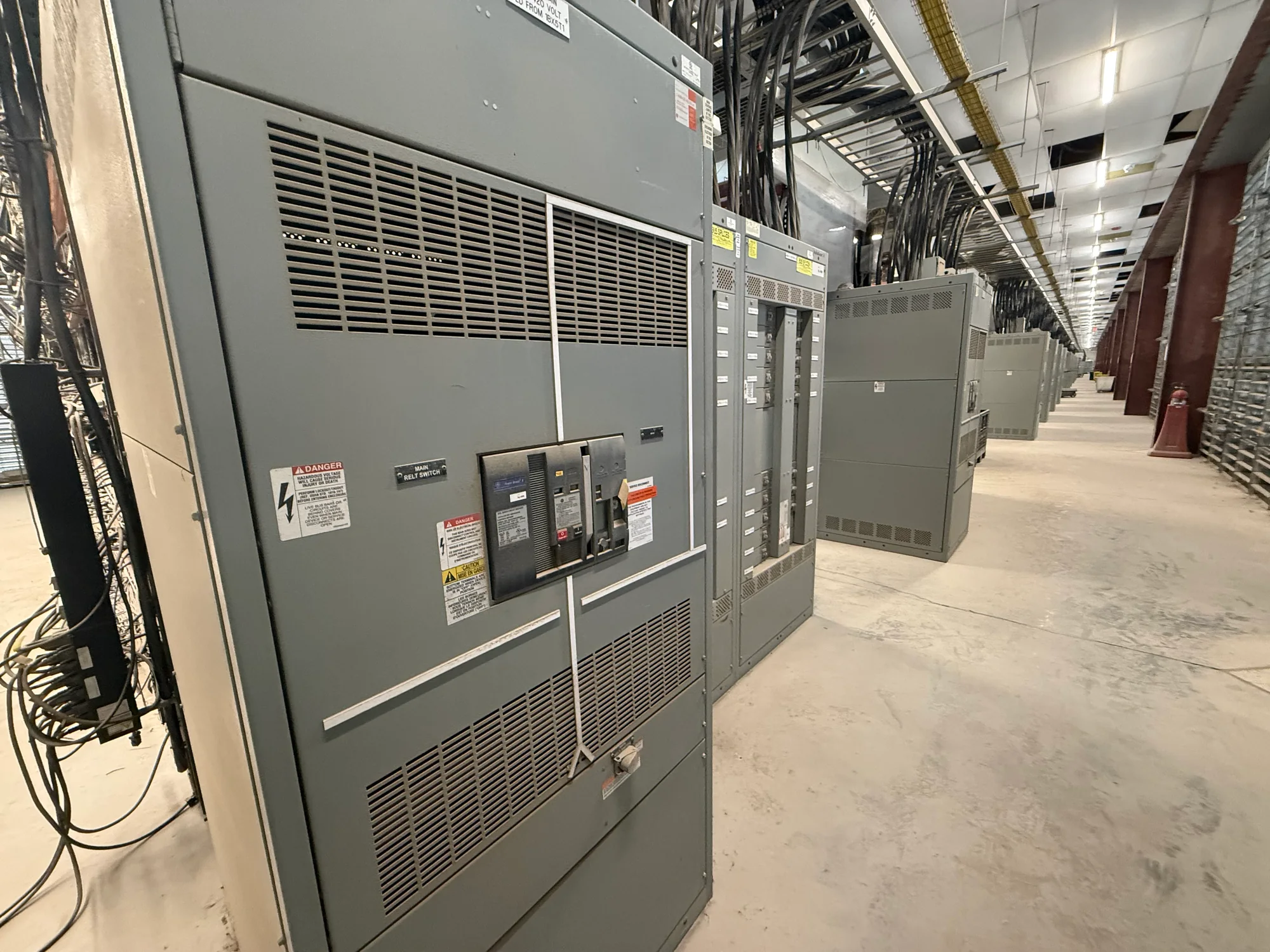
Map hospital loads to the power system
Begin by identifying the motors and driven equipment the motor control center will serve: pumps, fans, air-handling equipment, water systems and other facility loads. Record each motor’s voltage, full-load current, starting method, operating profile and location, then distinguish essential loads from nonessential ones. In a hospital, that distinction affects where equipment connects, what transfer arrangements apply and how operators respond during an outage. An MCC does not itself establish a facility’s emergency-power design; its lineup and feeders must fit the electrical engineer’s distribution plan, including the source and transfer scheme assigned to each load. Confirm available fault current, system grounding, feeder routes and any utility or generator operating conditions that affect equipment selection. A current one-line diagram and load schedule give the design team a sound basis for decisions and help prevent late changes to bus, compartment or control requirements.
Coordinate essential power continuity
Continuity planning should follow the facility’s approved electrical design and the function of each connected system, rather than relying on a general label such as “hospital load.” Identify which motors must remain available, which may restart after transfer, and which require sequenced restoration to avoid excessive demand or process disruption. Where a motor control center serves loads supplied from different sources, the engineer must define the permitted arrangement and separation, as well as any interlocking or transfer interfaces. Review generator capacity, starting inrush, voltage dip tolerance and restart priorities with the teams responsible for the emergency-power system and mechanical equipment. Drives can support controlled acceleration and process adjustment, but their compatibility with the supply, motor and backup source must be evaluated. Document control power source, undervoltage behavior, restart logic and alarms so the facility can understand what happens through loss and restoration of power.
| System | Voltage, phase, current and available fault current |
|---|---|
| Configuration | Lineup, protection, controls and enclosure as specified |
| Compliance | Applicable standards and listing confirmed for the assembly |
| Delivery | California and nationwide; schedule confirmed by quote |
Select starters, drives and feeder protection
Choose a starting and control approach for each load based on its torque requirements, duty cycle, process behavior and electrical impact. Across-the-line starters may suit some motors, while reduced-voltage methods or adjustable-speed drives may be appropriate where starting current, speed control or process needs warrant them. Drives introduce additional coordination questions, including harmonic effects, motor insulation and cable considerations, bypass strategy, cooling and interaction with generator or transfer equipment. Feeder and motor protection settings must coordinate with upstream devices and protect conductors and connected equipment under the conditions identified by the project engineer. Confirm interrupting and withstand requirements against the calculated available fault current, and assess selectivity where continuity of other loads matters. Protection decisions belong to qualified professionals using the project’s system study, applicable codes and equipment data; a device label or nominal motor size alone is not a complete basis for selection.
Design for safe isolation and maintainability
Maintenance planning should be part of the MCC specification, not an afterthought. Identify which compartments require isolation, how technicians will verify a safe work condition, and whether equipment can be serviced without interrupting unrelated hospital loads. The required isolation method and operating practices depend on the equipment design, applicable regulations and facility procedures. Provide clear circuit identification, control schematics, source information and labeling that support troubleshooting and lockout/tagout by qualified personnel. Consider access for inspection, cable termination space, ventilation, environmental conditions and the route needed to move components into or out of the electrical room. Define spare space and spare control provisions deliberately; excess capacity can add cost and footprint, while insufficient provision can complicate future changes. The facility’s electrical maintenance team should review operating modes, bypasses and alarm indications before the design is finalized, especially where an unnoticed state could affect essential building services.
Prepare a project-ready specification
A useful inquiry package includes the latest one-line diagram, motor and feeder schedules, fault-current and coordination-study information, source and transfer details, room dimensions, cable-entry preferences and environmental conditions. Describe the function and criticality of each load, required control interfaces, communications expectations, metering needs and any sequence-of-operation requirements. Identify applicable healthcare facility requirements, project specifications and jurisdictional codes for review by the engineer and authority having jurisdiction. Standards and ratings must be confirmed for the specific equipment and application; they should not be assumed from a general hospital designation. For a new MCC, share the construction schedule and decision deadlines so design review can identify long-lead or coordination-sensitive items early. Switchgear Builder California builds new equipment in the USA with American components and supplies customers in California and nationwide. Project-specific configuration, schedule-sensitive options and shipping arrangements are subject to review. Provide complete technical documents to support a focused discussion and next-step scope.