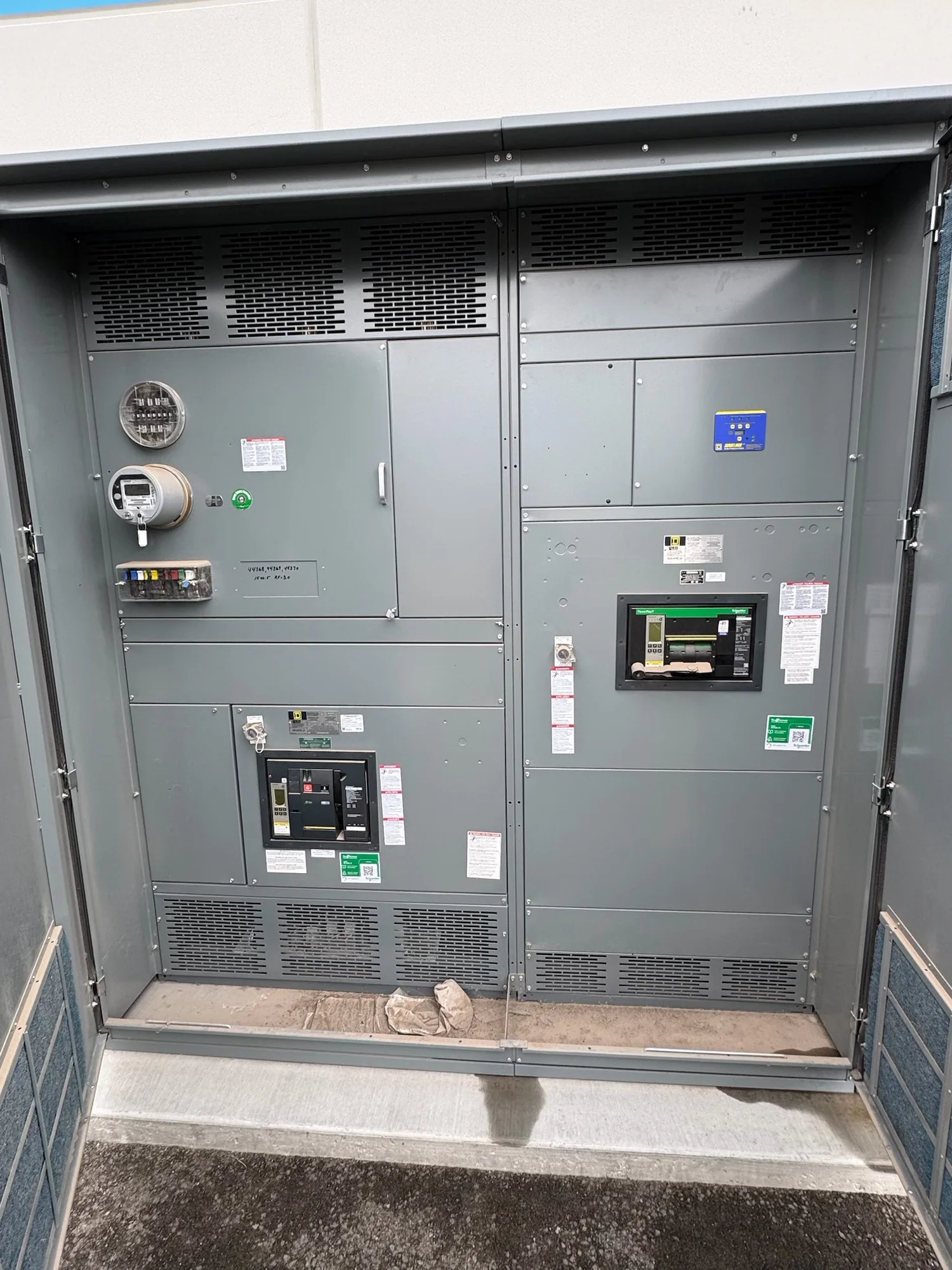
Start with the hospital’s power architecture
Hospital low-voltage switchgear must fit the electrical architecture that keeps clinical, support and life-safety functions supplied under normal and abnormal conditions. Begin with current one-line diagrams and identify utility services, transformers, generators, transfer equipment, distribution paths and major loads. Distinguish essential electrical system branches and other critical loads according to the facility’s design and applicable requirements; the labels alone do not establish how a load must be served. Document voltage, phase, frequency, available fault current, grounding arrangement and the expected operating states. Those inputs shape bus ratings, interrupting requirements, source arrangements and breaker selection, all of which require project-specific engineering confirmation. Map normal and alternate power paths so the lineup supports the intended transfer and restoration sequence without creating an unintended dependency. For expansions or replacements, verify existing conditions, space, cable entry and interfaces before defining the new assembly. A coordinated design basis helps the manufacturer and project team resolve constraints early.
Coordinate breakers for selective protection
Breaker selection is a system decision, not simply a matter of matching nominal current to a load. The engineer of record should evaluate load characteristics, conductor protection, equipment withstand and available fault current, then coordinate protective devices across the sources and downstream distribution. In a hospital, selective coordination can help limit the area affected by a fault, but its application and boundaries must follow the project’s adopted codes, system design and authority having jurisdiction. Review time-current curves, trip settings and short-circuit studies for utility, generator and transfer conditions where applicable; source impedance and fault contribution may differ by operating mode. Consider how electronic trip functions, ground-fault protection and maintenance settings interact with upstream and downstream devices. Confirm that breaker frame, trip unit, interrupting rating, accessory needs and physical arrangement are compatible with the specified assembly. Qualified professionals determine protection, ratings and applicable codes for each project. Capture assumptions and study revisions so later changes to sources or loads prompt a coordination review.
| System | Voltage, phase, current and available fault current |
|---|---|
| Configuration | Lineup, protection, controls and enclosure as specified |
| Compliance | Applicable standards and listing confirmed for the assembly |
| Delivery | California and nationwide; schedule confirmed by quote |
Plan maintenance isolation without losing control
Maintenance access should be considered alongside continuity objectives, since inspection or breaker work can require taking equipment out of service. The project team should identify which sections, sources and downstream loads may be affected by isolation, and whether alternate feeds or operating procedures can support the facility’s approved plan. Physical segregation, drawout arrangements, shutters, key interlocks, metering and control interfaces may be relevant design topics, but suitability depends on the selected equipment and the operating philosophy. Do not treat a feature as a substitute for an engineered switching procedure, lockout/tagout practices or verification of absence of voltage. Review clearances, working space, access routes, ventilation and service-side connections against the room layout and applicable requirements. Include maintenance staff in design review when practical: their understanding of normal, emergency and maintenance configurations can expose confusing indications or hard-to-reach components. Define what can be inspected or isolated, who is authorized to operate it, and what controls prevent unsafe switching. That clarity supports maintainability while respecting patient-care continuity.
Address healthcare facility requirements early
Healthcare projects involve an interplay of electrical codes, essential-system criteria, owner standards, clinical priorities and jurisdictional review. Establish the governing code editions and project-specific requirements with the design team and authority having jurisdiction rather than relying on a generic hospital label. Identify which loads belong to each required branch, how transfer equipment and distribution are arranged, and what performance or monitoring functions the owner expects. Low-voltage switchboards, where specified, may need to be evaluated for applicable UL 891 requirements; that reference applies to low-voltage switchboards, not automatically to every low-voltage assembly or to medium- or high-voltage equipment. Confirm the standards and evaluation basis applicable to the actual equipment and scope; a standards reference alone does not establish a third-party listing. Coordinate fire and life-safety interfaces, selective coordination documentation, labeling, arc-flash information and commissioning responsibilities as required by the project. Early alignment reduces late drawing changes and helps keep procurement documents consistent with the design intent.
Prepare a complete design and procurement package
A useful request for quotation includes the latest one-line diagram, equipment schedules, load and fault-study information, operating sequence, room plans and the owner’s applicable specifications. State source and tie arrangements, incoming and outgoing feeder details, cable or bus connections, metering and control needs, environmental conditions, access constraints and required documentation. Flag future provisions separately from installed equipment so their purpose, ratings and physical impact can be reviewed rather than assumed. Ask the project team to resolve discrepancies between drawings and specifications before release, and identify the responsible party for studies, settings, field verification, installation and commissioning. For a replacement or renovation, document outage windows, temporary-power strategy and interfaces with existing equipment; any schedule-sensitive or expedited approach requires project review and cannot be presumed. Switchgear Builder California builds new equipment in the USA with American components and supplies customers in California and nationwide, subject to project review. A well-defined package gives the manufacturer a sound basis to clarify exceptions, coordinate interfaces and support a maintainable hospital distribution design.