Start with a realistic charging-load profile
Commercial EV charging demand depends on more than the number of parking spaces. Record charger quantity, equipment input ratings, expected operating hours, vehicle dwell time and the charging strategy for each use area. Employee parking, public charging, fleet depots and customer lots can have very different load patterns. Note whether chargers are expected to operate simultaneously or whether an energy management system will limit aggregate demand. Treat those controls as design inputs, not a substitute for verifying the electrical system's capacity and protection. Include planned phases, because an installation designed only for the first group of chargers may constrain later expansion. An engineer can use this information to develop a load estimate and identify operating assumptions that need confirmation. Share charger schedules and manufacturer data early so the distribution design reflects actual equipment and intended use, rather than a simple count of charging stations.
Verify spare capacity across the existing system
A service or switchboard's apparent unused space does not establish that it can support EV charging. Review one-line diagrams, equipment nameplates, transformer data, service capacity, feeder and bus ratings, protective devices, and available breaker positions. Compare records with field conditions; older drawings may not show modifications, changed loads or equipment substitutions. Where appropriate, qualified professionals should assess demand using measured operating data and applicable code methods, then consider coincident loads and future building growth. Check the path from utility service through transformers and distribution equipment to the proposed charger panels, since a limitation at any point can govern the project. Also evaluate fault-current conditions, voltage drop and coordination implications as the system changes. Document unknowns and arrange surveys or utility discussions where needed. This capacity review can distinguish a workable connection to existing distribution from a project that needs upstream changes.
| System | Voltage, phase, current and available fault current |
|---|---|
| Configuration | Lineup, protection, controls and enclosure as specified |
| Compliance | Applicable standards and listing confirmed for the assembly |
| Delivery | California and nationwide; schedule confirmed by quote |
Compare service upgrades with load management
If projected charging demand exceeds practical spare capacity, compare several options before fixing the equipment scope. Managed charging can shift or cap charging load, potentially reducing peak demand, but its effectiveness depends on operating requirements, controls, communications and the number of vehicles that must be ready by a given time. A service or transformer upgrade may provide more capacity, while adding cost, coordination steps and work involving the utility or other building systems. A phased approach can align installed capacity with vehicle adoption, provided the initial distribution design preserves a feasible path for later expansion. Evaluate these alternatives against fleet schedules, tenant needs, demand charges where applicable, construction constraints and resilience priorities. The chosen approach should state its assumptions and limits clearly. Have the electrical engineer and relevant utility representatives confirm service requirements, protection and code considerations; neither load management nor additional equipment automatically resolves every system constraint.
Shape distribution equipment around the project
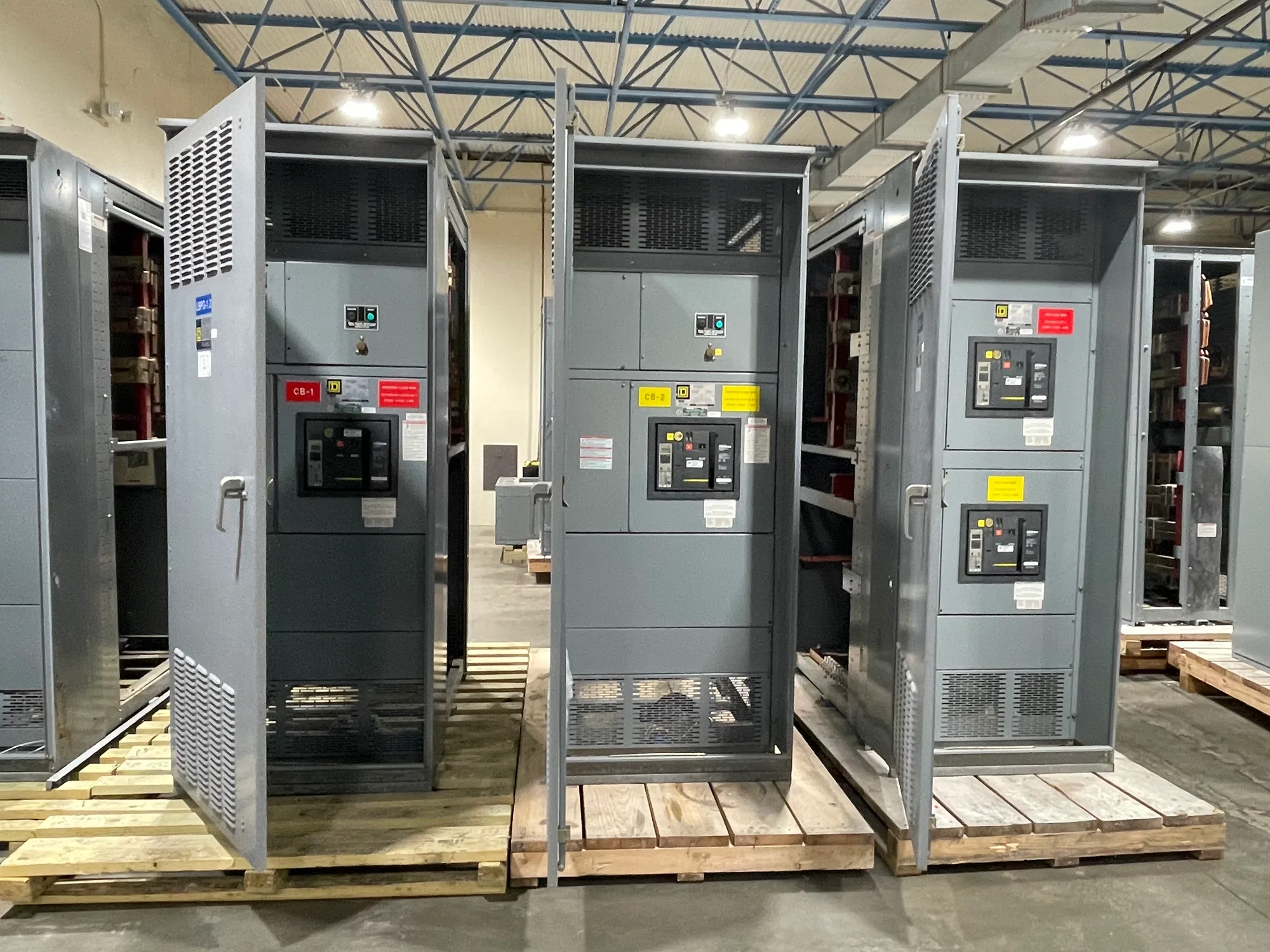
Once the load study and upgrade strategy are established, translate them into defined equipment requirements. Identify system voltage, phase, frequency, available fault current, incoming service arrangement, required feeder and branch circuits, spaces for future devices, enclosure environment and installation constraints. Confirm charger input data and any anticipated power-conversion or control equipment with its supplier. Consider whether the project calls for new low-voltage switchboards, panels or upstream distribution changes, and determine how equipment interfaces with existing gear. For applicable low-voltage switchboards, UL 891 may be a relevant standard; its mention does not establish a third-party listing. For medium- or high-voltage equipment, identify and verify standards applicable to that specific equipment. Qualified professionals determine ratings, protection and applicable codes for each project. As an American manufacturer and builder of new equipment using American components, Switchgear Builder California can review project information and discuss a suitable equipment scope without assuming unverified ratings or approvals.
Prepare information for a productive review
For an initial equipment discussion, provide the latest one-line diagram, load calculations or interval data, service and transformer information, charger schedule, site layout, project phasing and target operating conditions. Include the intended utility point of connection, known service limitations, environmental conditions and any requirements for monitoring or load controls. Flag what is confirmed versus still under study, and identify the engineer, electrical contractor and utility contact responsible for open questions. This makes it easier to identify missing inputs before a design is locked and to compare equipment changes with upstream work. If schedule-sensitive or expedited options matter, raise that early; feasibility depends on project review, design completeness and other constraints, so timing should not be assumed. Customers in California and across the country can discuss new commercial EV charging distribution equipment and shipping needs with the manufacturer. A clear scope supports a more useful review and a coordinated next step.