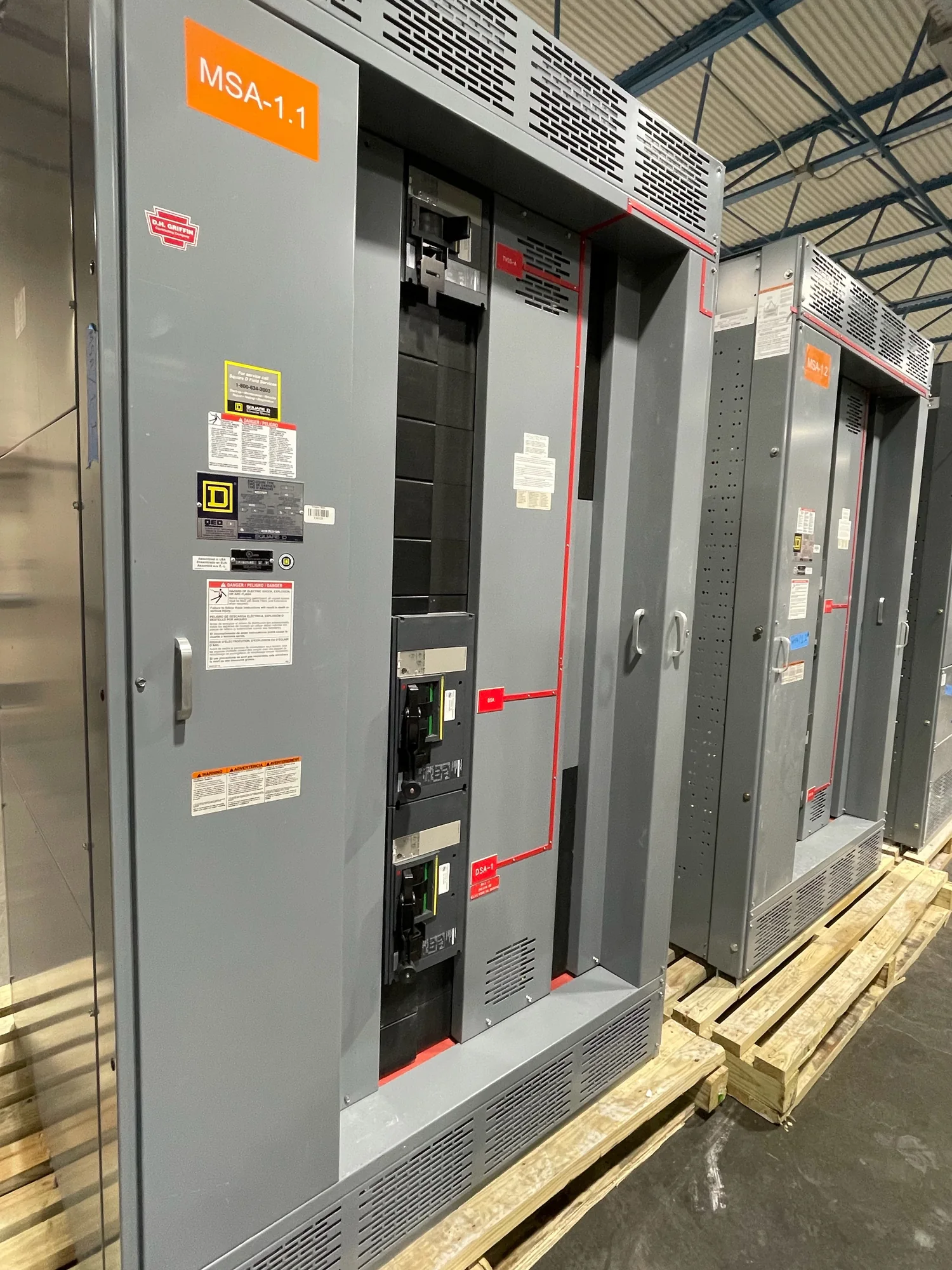
Define responsibilities before equipment ships
A successful switchgear move depends on more than arranging a truck. The project team should identify who coordinates transportation, receives the shipment, provides unloading equipment, directs rigging and accepts the equipment at its final location. Responsibilities may be divided among the manufacturer, electrical contractor, general contractor, rigging firm, carrier and facility owner, so assumptions should be replaced with an agreed plan. Confirm the delivery address, receiving contact, delivery hours, advance notice requirements and any restrictions on truck type or arrival route. Establish who can authorize changes if access is blocked or the site is not ready. For California projects and work elsewhere nationwide, logistics are evaluated against the particular shipment and destination; transportation or timing should not be assumed until details are reviewed. A written responsibility matrix and a single point of coordination help prevent missed handoffs, avoidable waiting and confusion over who controls each step.
Use shipment details to plan handling
Rigging decisions must be based on the actual equipment configuration and shipping arrangement, not on a generic switchgear weight or footprint. Before a move is scheduled, gather the available overall dimensions, shipping weights, number of sections, center-of-gravity information, lifting points and handling instructions. Confirm whether sections will arrive assembled or divided for transport, and identify any loose accessories or separately packed items that need their own receiving controls. Ask the manufacturer to clarify handling information for the specific equipment being supplied and make sure it reaches the carrier and rigging contractor in time to plan. The qualified rigging professional determines the appropriate lifting method, equipment capacity and personnel based on verified loads and site conditions. Avoid using enclosure members, bus supports or other features as lifting points unless instructions explicitly identify them for that purpose. Protect equipment from impact, moisture and contamination during transfer, and document visible shipping damage promptly.
| System | Voltage, phase, current and available fault current |
|---|---|
| Configuration | Lineup, protection, controls and enclosure as specified |
| Compliance | Applicable standards and listing confirmed for the assembly |
| Delivery | California and nationwide; schedule confirmed by quote |
Check the complete route into the building
Site access is a continuous route, from the delivery vehicle to the equipment’s final position. Walk it with the relevant trades and check gate widths, turning space, overhead clearances, slopes, floor transitions, door openings, corridors and elevator dimensions or limits. Confirm that temporary fencing, stored material, active construction and other work will not obstruct the move on the scheduled day. A route that accommodates a truck may still be unsuitable for a forklift, crane, skates or the switchgear sections themselves. Evaluate floor loading, ramps, loading docks and any suspended or elevated surfaces with qualified project professionals; do not rely on visual judgment alone. If a crane pick or exterior opening is being considered, coordinate the lift area, utilities, weather exposure, permits and building access with the parties responsible for those conditions. Record measurements, identify pinch points and agree on an alternate approach where practical. Early route review gives the team time to address constraints before delivery commitments become difficult to change.
Coordinate offloading, staging and installation
Offloading and staging require a prepared receiving area as well as suitable equipment and trained personnel. Determine where the carrier can position the vehicle, how the load will be transferred, and whether the delivery sequence supports the planned installation order. Confirm who supplies and operates forklifts, cranes, rigging gear or other handling equipment, and who controls exclusion zones and site safety during the operation. The carrier’s role, the rigging contractor’s scope and the electrical contractor’s installation responsibilities should be aligned rather than inferred. Select staging locations that can support the load and protect it from construction traffic, water, dust and unauthorized access. Preserve identification and section order so equipment can be matched to approved drawings and installed as intended. If the equipment cannot be moved directly to its final location, plan the additional handling, storage duration and protection measures. Qualified professionals should evaluate lifting, movement and placement hazards, while the project team coordinates access with other trades and facility operations.
Close the loop with a project logistics plan
Before release for delivery, consolidate the handling plan with the latest equipment information, site measurements, contacts, responsibilities and agreed sequence. Include delivery-notice procedures, receiving hours, unloading arrangements, route instructions, staging location, weather contingencies and a process for reporting damage or discrepancies. Reconfirm that the site will be ready and that required access, labor and equipment are available; a schedule-sensitive or expedited option can be discussed during project review, but timing depends on the specific equipment and circumstances. Identify who can pause the move if conditions differ from the plan and how a revised approach will be approved. Keep the plan available to the manufacturer, carrier, rigging firm, contractors and owner representatives who need it, and update it when site conditions or shipment details change. The practical next step is to share project drawings, delivery constraints, destination details and preferred sequencing with the project team. Early coordination supports a safer, more predictable transition from transport to installation.