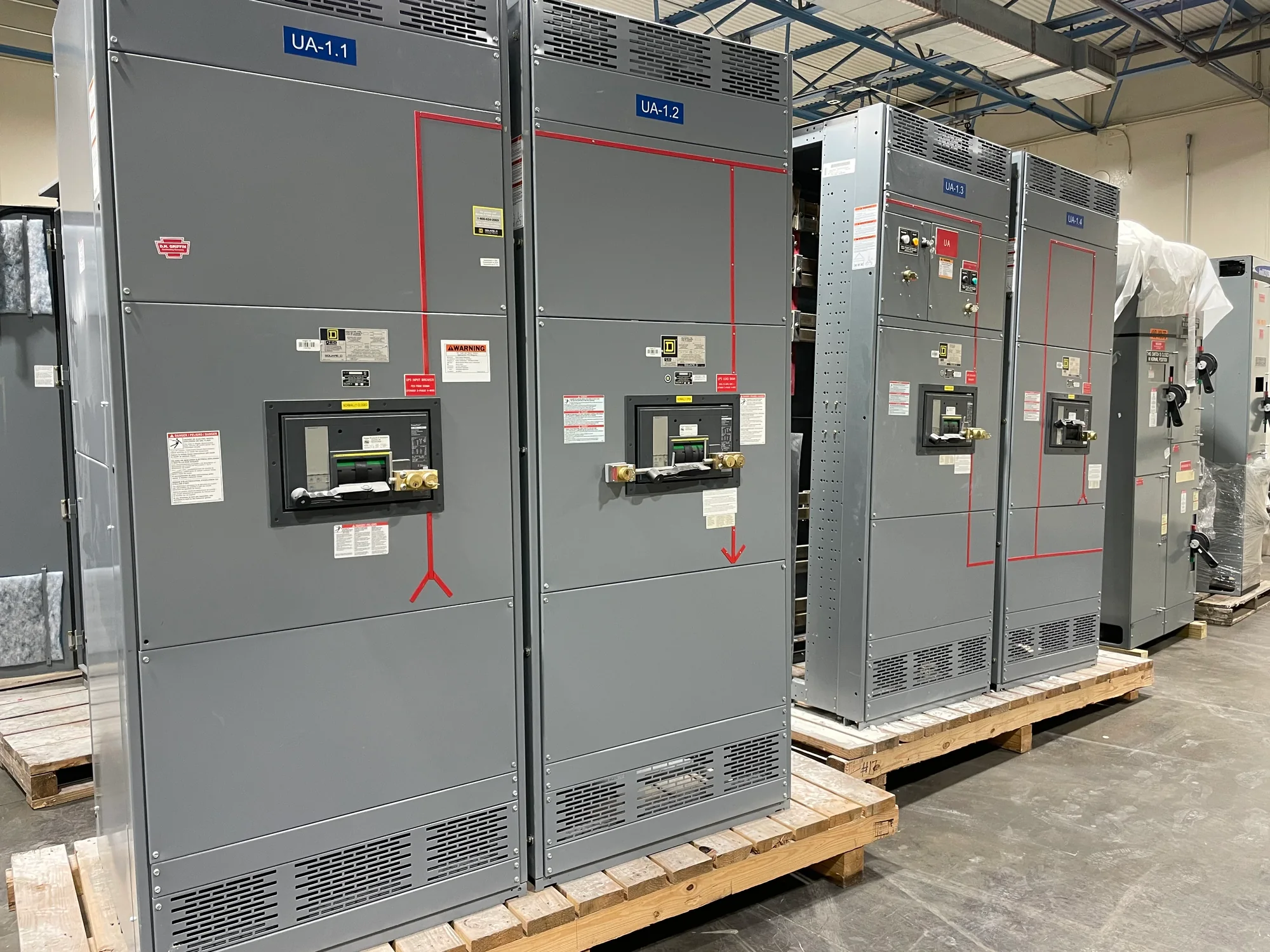
Choose a compact arrangement around the motor duties
An IEC starter motor control center can group motor starter functions in a compact arrangement, but the right configuration begins with the loads rather than the enclosure. For each motor, identify voltage, full-load current, horsepower or kilowatt rating, starting method, operating duty and the control functions required. Note whether the load is continuous, intermittent, reversing or subject to frequent starts, and whether a variable-speed drive is part of the intended solution. These distinctions affect starter selection, thermal considerations, protection and the space needed for each unit. A direct-on-line starter may suit a duty that does not require reduced starting current or speed control; other applications may call for a different approach after engineering review. Compactness is useful when floor area or equipment-room layout is constrained, but it should not come at the expense of maintainability, heat management or future access. Share the motor schedule and operating sequence so the arrangement can be evaluated against actual service conditions.
Compare grouping, access and future changes
Compact starter lineups can be organized to suit the project’s control scheme and maintenance practices. Consider which motors should share a section, how operators will identify and isolate each function, and whether access from the front is appropriate for the installation. The physical arrangement must also work with cable entry, field wiring routes, ventilation needs, available clearances and the equipment-room plan. Grouping several starters in a smaller footprint can simplify a constrained layout, while separating functions may improve access or help manage distinct process areas. Neither choice is universally best: installation conditions and the consequences of taking one unit out of service matter. Identify spare capacity or anticipated motor additions early, rather than assuming an empty space can be added later without design changes. Provide room dimensions, access limitations, expected cable approach and any preference for a particular lineup orientation. These details help the design team assess whether the desired compact arrangement remains practical to install, operate and maintain.
| System | Voltage, phase, current and available fault current |
|---|---|
| Configuration | Lineup, protection, controls and enclosure as specified |
| Compliance | Applicable standards and listing confirmed for the assembly |
| Delivery | California and nationwide; schedule confirmed by quote |
Specify component preferences without overlooking coordination
Project teams may have preferences for IEC contactors, overload protection, control relays, pilot devices, terminals or other components. Record preferred manufacturers and part families, along with any approved-equipment requirements, interchangeability goals or maintenance standards that influence selection. A preference is a useful design input, not a substitute for checking suitability. Components must be evaluated for the motor duty, electrical conditions, control voltage, available fault current and the coordination approach established for the system. Protection and short-circuit coordination should be determined by qualified professionals using the project’s actual data and applicable requirements. If a preferred component is unavailable or does not suit a specified condition, clarify whether an equivalent is acceptable before design decisions are fixed. Also identify control-interface requirements, such as hardwired signals, communications or connections to a plant control system. A clear preference schedule distinguishes mandatory requirements from acceptable alternatives and reduces avoidable changes during engineering and procurement.
Provide electrical, control and installation data
A useful request for quotation or design review includes the one-line diagram, motor list, system voltage and frequency, grounding information, available fault-current data and the intended protective-device coordination criteria. Include control schematics or a sequence of operation where available, plus required interlocks, alarms, local controls and remote commands. Identify the installation environment, enclosure needs, ambient conditions, cable entry direction and any space or access constraints. State project-specific requirements for equipment labels, documentation, inspection, testing and applicable codes or standards so they can be reviewed for the particular assembly. Ratings and standards must be confirmed against the equipment type and project conditions; qualified professionals determine protection, ratings and applicable codes. For equipment beyond low-voltage switchboards, identify and verify standards applicable to the specific equipment rather than assuming one standard covers every assembly. California projects and customers elsewhere in the United States can provide these details at the outset to support a focused technical review and reduce uncertainty in scope.
Review the design before committing to the lineup
Before an arrangement is finalized, align the motor schedule, component preferences, control intent and physical layout with the project’s electrical design. Resolve open items such as starting method, protection settings, interface points, spare capacity and responsibility for field wiring. Review how a fault or maintenance event affects related motors, and confirm that equipment access supports the facility’s isolation and service procedures. If a schedule-sensitive project may benefit from an expedited option, raise that need early; feasibility and timing are subject to project review and confirmed scope, components and documentation. Switchgear Builder California builds new equipment in the USA with American components and supplies switchgear to customers; project requirements should be discussed before a configuration is treated as settled. A practical next step is to submit the motor list, drawings, preferred components and installation constraints for review. The resulting discussion can identify missing inputs, compare compact arrangements and establish a design basis appropriate to the application.