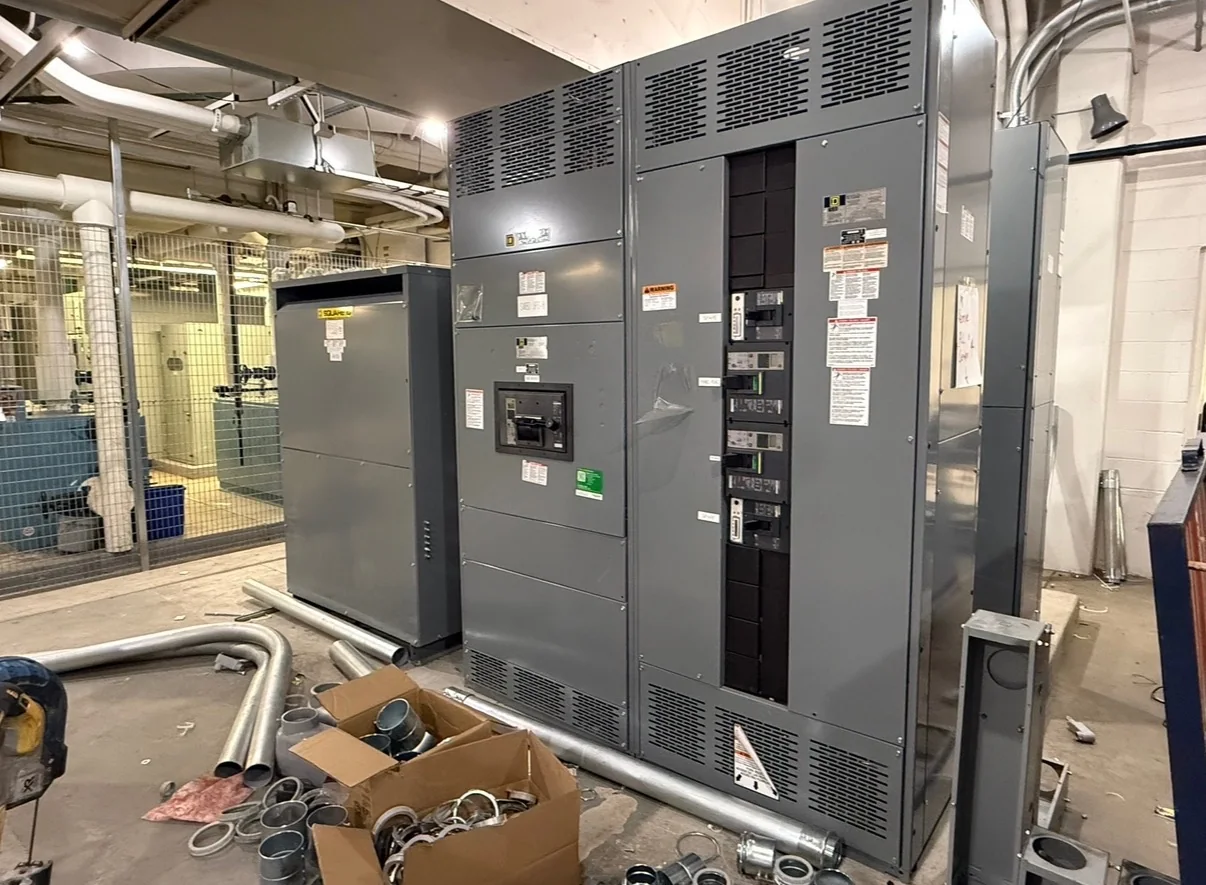
What the fourth pole changes
A four-pole transfer switch switches the neutral conductor as well as the three phase conductors. That differs from a three-pole arrangement, in which the neutral remains continuous between sources. The distinction matters when a generator or other alternate source has a neutral-to-ground connection and is intended to operate as a separately derived system. Switching the neutral can isolate the active source neutral from the inactive source, helping prevent unintended parallel paths between source grounding points. It is not, by itself, a complete grounding solution: the transfer arrangement, source bonding, equipment grounding conductors, and protective devices must work as a coordinated system. Whether four-pole switching is appropriate depends on the service configuration, source design, applicable code requirements, and the transfer equipment’s intended operation. Have the electrical engineer establish the grounding approach and identify the required switched conductors before specifying the assembly.
Determine whether a source is separately derived
The project’s one-line diagram should show how each source is grounded and whether the neutral is bonded to ground at the source, at the service, or elsewhere as allowed by the design. A generator may be configured as a separately derived system, but that conclusion depends on how the transfer equipment switches the neutral and on the installation details; the equipment label alone does not settle it. If sources share a solid neutral, their grounding and bonding arrangement may differ from a system that transfers the neutral between sources. Ask the engineer to document the normal and alternate source configurations, bonding points, grounding electrode connections where applicable, and the intended fault-current return path. Also identify any bypass or maintenance operating modes, since these may change which conductors are connected. Resolving these details early helps avoid incompatible grounding assumptions in drawings, equipment specifications, and field wiring.
| System | Voltage, phase, current and available fault current |
|---|---|
| Configuration | Lineup, protection, controls and enclosure as specified |
| Compliance | Applicable standards and listing confirmed for the assembly |
| Delivery | California and nationwide; schedule confirmed by quote |
Coordinate switching, bonding, and protection
Neutral switching must be considered alongside the transfer sequence and the protection scheme. The design team should confirm when the neutral makes and breaks relative to the phase contacts, whether the transfer is open or closed transition, and what operating modes the project requires. Do not assume a particular contact sequence or switching behavior without confirming it for the selected design. Review overcurrent protection, ground-fault sensing, and any residual or differential measurement arrangements with the engineer responsible for the system. A grounding path that is unintentionally duplicated or interrupted can affect how a fault is detected and cleared; sensor placement and conductor routing therefore matter as much as the pole count. Confirm the required voltage, continuous current, fault-duty and withstand considerations, source characteristics, and control interface as project inputs. Qualified professionals must determine protection settings, ratings, grounding methods, and applicable code requirements for the actual installation.
Specify the design inputs clearly
A useful request for a four-pole transfer switch includes the project one-line diagram, source and load voltages, phase and frequency, load current, available fault-current information, and the required transfer operating mode. State whether the neutral is to be switched, describe each source’s neutral-ground relationship, and show the intended bonding and grounding points. Identify loads with special transfer or grounding considerations, including sensitive electronic equipment, separately controlled neutrals, or ground-fault protection requirements. Provide enclosure and installation conditions, control power expectations, interface signals, and any required bypass or service provisions, if applicable. Include the governing project specifications and standards for the specific equipment, then request confirmation of design fit rather than assuming that any particular rating, feature, or approval is available. Complete inputs enable a meaningful technical review and help surface conflicts between the transfer equipment, source grounding, protection coordination, and installation drawings before procurement.
Review submittals and field coordination
During submittal review, compare the proposed pole arrangement and neutral switching sequence against the approved one-line and grounding design. Check that the drawings identify neutral and equipment grounding terminals separately, show the intended source bonding points, and align with protective-device and ground-fault sensing details. Resolve discrepancies with the engineer of record before release or installation; field teams should not improvise neutral bonds to compensate for unclear documents. Coordinate conductor terminations, labeling, control wiring, and any bypass or maintenance states with the installation plan. Commissioning should verify transfer operation and confirm that the installed bonding and grounding configuration matches the approved design, using procedures established by qualified personnel. Switchgear Builder California builds new equipment in the United States using American components and supplies projects in California and nationwide, subject to project review. Share drawings and specifications early to discuss configuration, schedule-sensitive possibilities, and practical next steps.