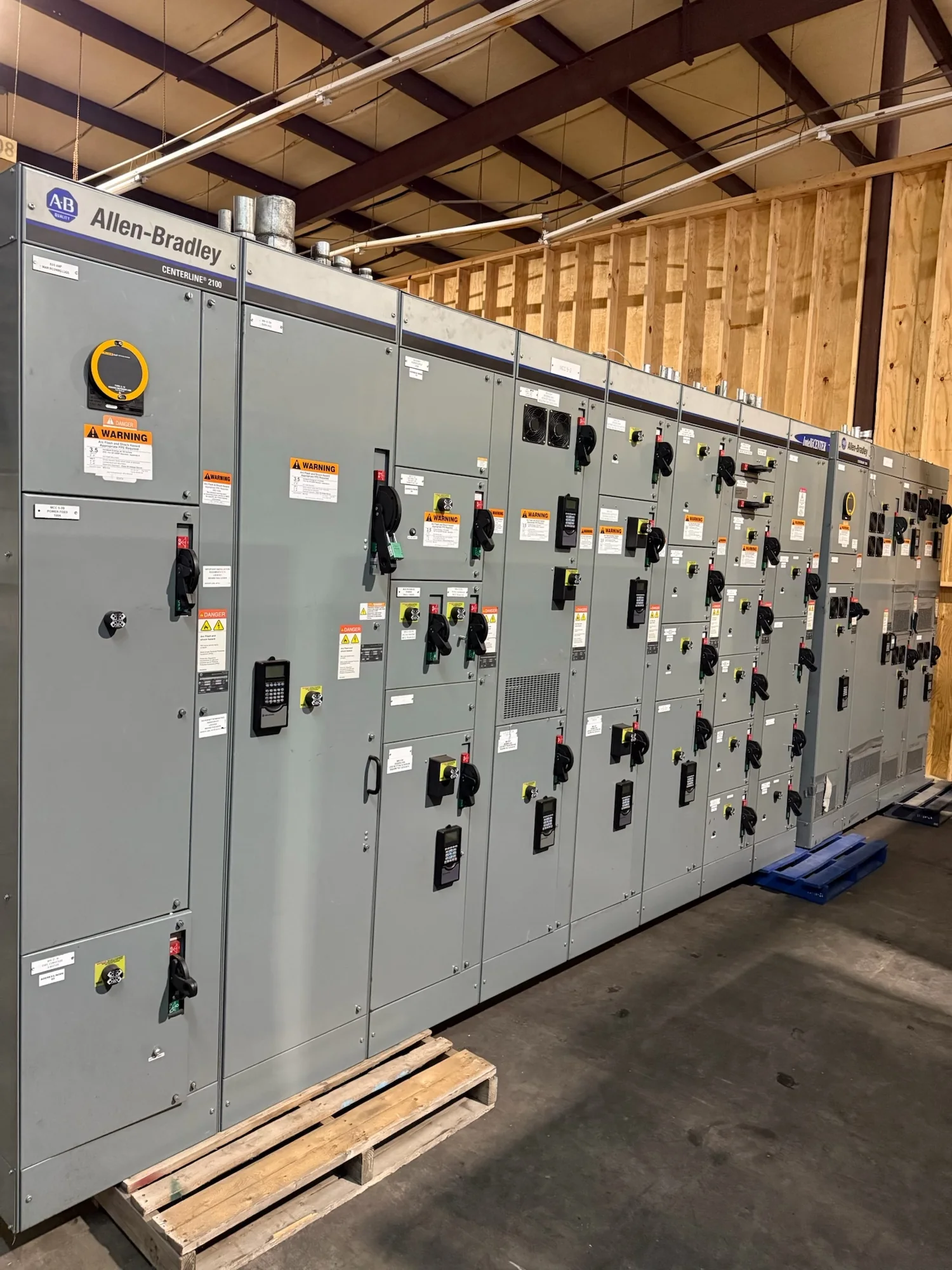
Organize Circuits Around Facility Loads
Wastewater facilities combine loads with different operating patterns: influent and lift-station pumps, aeration equipment, mixers, screening systems, controls, lighting, and service receptacles. A useful panelboard plan starts with an updated load schedule, not just a list of equipment. Identify each load’s voltage, phase, full-load current, starting method, duty cycle, and required overcurrent protection, then distinguish continuous process loads from intermittent or maintenance loads. Keep circuits for critical process functions identifiable and logically grouped, while avoiding assumptions that adjacent equipment should share a panel or feeder. Confirm available fault current, feeder capacity, and the coordination requirements of upstream protective devices. Where motor loads are involved, verify whether branch-circuit protection is handled at the panelboard or by a separate motor control assembly. Clear circuit descriptions, spare capacity, and room for future circuits can make troubleshooting and process changes more manageable over the life of the facility.
Account for Pumping and Motor Starting
Pumps can dominate a wastewater panel schedule, but their electrical demands vary with pump size, control method, and operating sequence. Gather motor nameplate data and determine whether each pump starts across the line, uses a soft starter, or is driven by a variable-frequency drive. Starting current, acceleration time, harmonic contribution, and expected simultaneous operation can affect feeder sizing, protective-device selection, voltage drop, and coordination. For duplex or triplex installations, establish how lead-lag rotation, standby pumping, and high-level response are controlled; a nominally redundant pump is not useful if its power source or control path shares the same limiting failure. Panelboards distribute branch circuits, but they do not replace motor controllers or process controls where those are needed. Coordinate panel schedules and one-line diagrams with the controls designer and pump supplier, and identify which equipment is supplied from normal power, standby power, or both. Qualified professionals should confirm ratings and protection for the specific installation.
| System | Voltage, phase, current and available fault current |
|---|---|
| Configuration | Lineup, protection, controls and enclosure as specified |
| Compliance | Applicable standards and listing confirmed for the assembly |
| Delivery | California and nationwide; schedule confirmed by quote |
Match Equipment to Wet and Corrosive Areas
A wastewater site may include dry electrical rooms, washdown spaces, outdoor structures, and areas exposed to hydrogen sulfide, chemical vapors, salt, or condensation. The panelboard location is therefore a design decision, not simply a matter of finding wall space near the loads. Determine the environmental conditions at the actual mounting point, including water exposure, temperature range, corrosive agents, dust, and ventilation. Then confirm the required enclosure construction, materials, finish, and environmental rating against applicable codes and the project specification. Moving a panelboard to a cleaner, conditioned room can reduce exposure, but may increase feeder length, voltage drop, and installation cost; placing it near process equipment can simplify branch routing while increasing environmental risk. Consider cable entry, drain paths, working clearances, access for safe maintenance, and separation from plumbing or chemical piping. Have qualified electrical professionals evaluate area classification where applicable and select equipment appropriate to that documented environment.
Coordinate Standby Power and Essential Loads
Standby power planning should identify which wastewater functions must continue during an outage and how they will be supplied. Essential loads may include selected pumps, controls, alarms, ventilation, and lighting, but the owner and design team must define priorities based on operating requirements and permit obligations. Map the normal and alternate sources on the one-line diagram, and clarify whether transfer equipment is upstream of a panelboard or whether separate distribution sections are contemplated. Generator capacity, motor starting sequence, load shedding, transfer timing, grounding, and available fault current can all affect panelboard and protective-device decisions. Avoid placing normal-only and standby-backed circuits together without clear identification and an intentional distribution scheme; maintainable labeling helps operators understand what remains energized in each mode. Review the expected operating scenarios, including generator testing and a second pump starting while other loads are running. Confirm source and transfer arrangements with the electrical engineer and generator-system designer rather than assuming that a panelboard alone provides standby capability.
Provide Design Data for a Buildable Schedule
A complete request for panelboard planning or pricing helps align the equipment with the facility’s real operating conditions. Provide the latest one-line diagram, panel schedules, load list, voltage and phase, feeder information, available fault-current study, and required enclosure or environmental conditions. Include project specifications, applicable code requirements, equipment interfaces, and the intended standby-power arrangement. Identify spare circuit expectations and whether future expansion should be accommodated by additional spaces, distribution capacity, or a planned downstream panel. Clarify site constraints such as room dimensions, cable entry direction, access clearances, and installation conditions; these details can affect configuration and coordination with other equipment. For replacement or expansion work, document the existing system and have qualified professionals verify compatibility, protection, and safe work procedures. Switchgear Builder California builds new equipment in the USA with American components and supplies customers in California and nationwide. Final scope, ratings, standards, and schedule-sensitive options require project review and confirmation before commitment.