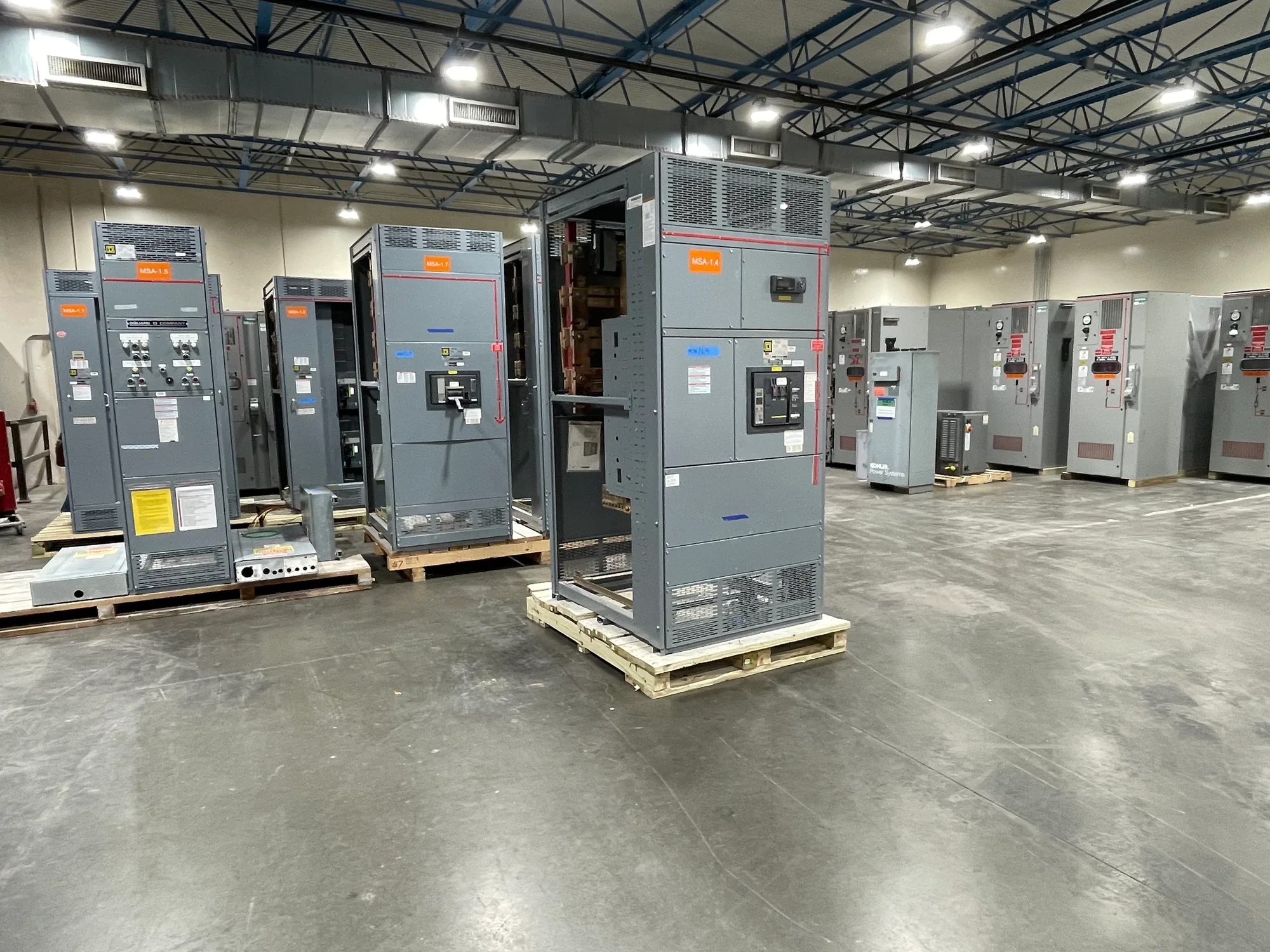
Map Station Service Loads and Distribution
Start with a clear picture of the loads each switchboard must serve. Station service may include pumps, fans, compressors, water treatment, controls, lighting, battery chargers and other auxiliary equipment, with operating patterns that vary by unit status and plant mode. Identify normal, standby and essential loads, their voltage and phase, expected demand, starting characteristics, and any required separation between systems. A one-line diagram should show sources, buses, ties and downstream distribution, while load schedules help expose spare capacity and possible bottlenecks. Confirm whether the board serves a single unit, shared plant auxiliaries or multiple operating areas; these boundaries affect bus arrangement, feeder grouping and outage consequences. Include existing site conditions and the intended operating sequence, not only nameplate totals. This early coordination gives the design team a useful basis for evaluating feeder distribution, protection and maintainability before equipment details are fixed.
Coordinate Generator and Source Interfaces
Generator interfaces require careful definition because the switchboard’s role depends on the plant electrical architecture. Clarify whether the equipment distributes auxiliary power, connects to a generator-related source, or participates in a transfer or bus-tie arrangement. Provide the one-line diagram, source and transformer data, grounding method, available fault-current information, operating modes and protective-device settings where available. Confirm the interface boundary with the generator, excitation, synchronizing, transfer and control systems; the switchboard should not be assumed to perform functions assigned to other equipment. Review normal and abnormal conditions, including source transitions and maintenance configurations, so that protection and interlocking requirements are understood. For each voltage class, identify the standards and codes applicable to that specific equipment and installation. Qualified professionals must determine ratings, protection, clearances and code requirements for the project. Resolve interface questions early with the plant electrical engineer and relevant equipment suppliers to reduce late drawing changes.
| System | Voltage, phase, current and available fault current |
|---|---|
| Configuration | Lineup, protection, controls and enclosure as specified |
| Compliance | Applicable standards and listing confirmed for the assembly |
| Delivery | California and nationwide; schedule confirmed by quote |
Size Feeders for Operating and Growth Needs
Feeder selection should reflect both present duty and a realistic view of future plant changes. Document each outgoing circuit’s load, cable or bus connection, motor-starting or other transient behavior, protective-device needs and destination. Check bus loading against operating scenarios rather than relying on a single aggregate demand figure; a unit outage or alternate source arrangement can shift loads in ways that affect capacity. Future circuits may justify reserved breaker spaces, bus capacity, cable entrance provisions or a planned extension point, but each choice has cost and footprint implications. Unused spaces do not automatically mean the assembly can accept any later load or device, so define what “future-ready” means and have the design reviewed against the intended expansion. Consider whether spare capacity is needed on every section or only at selected distribution points. A prioritized expansion plan lets buyers compare practical provisions with the cost of building more capacity into the initial project.
Plan Maintenance Around Plant Outages
Maintenance access and outage planning belong in the equipment scope from the outset. Identify which loads may be interrupted, which circuits require continuity, and whether plant procedures allow transfers to alternate sources during inspection or service. Confirm the intended isolation points, working clearances, cable access, lifting and removal paths, and the space needed for qualified personnel to perform approved tasks safely. Sectionalizing and tie arrangements can support operating flexibility, but they also introduce interlocking, protection and procedural considerations that must be evaluated together. Share the outage calendar, unit-by-unit constraints, commissioning sequence and any limits on simultaneous shutdowns with the switchgear team. Where construction or replacement must fit a narrow outage window, discuss schedule-sensitive options early; feasibility and timing depend on project review, engineering completeness and other constraints, and should not be assumed. Coordinate delivery, access and installation planning with the plant’s outage lead and electrical contractor.
Prepare a Complete Design and Procurement Package
A focused procurement package helps establish a workable design and limits avoidable clarification cycles. Include the latest one-line diagram, load and feeder schedules, source data, site voltage and frequency, grounding details, available fault current, protection philosophy and applicable equipment standards. Add room plans, environmental conditions, cable-entry preferences, conduit or busway interfaces, control and communication requirements, and expansion expectations. Identify the responsible parties for upstream protection, downstream coordination, generator controls and field connections so that each interface has an owner. Request drawings and technical submittals for review against the project documents, and resolve deviations before release for manufacture. Switchgear Builder California builds new switchgear in the USA using American components and supplies customers in California and nationwide; project scope and delivery arrangements are confirmed for each order. The practical next step is to send the plant’s electrical documents and outage constraints for an initial engineering and scope discussion.