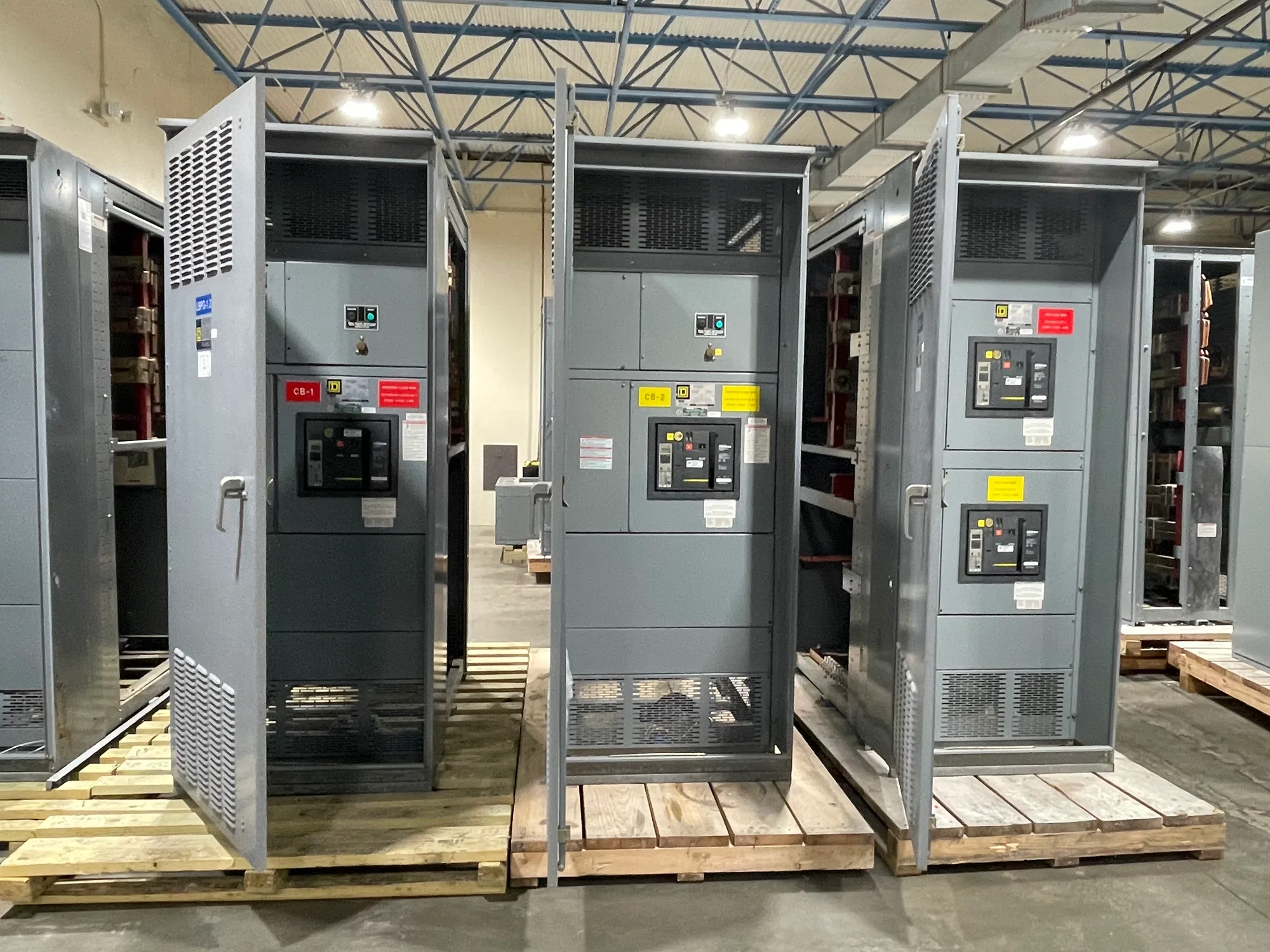
Start with the station-service load profile
Power-plant low-voltage switchgear supports the auxiliary systems that keep generation and plant operations functioning. Establish the design basis by documenting normal, emergency and operating-mode loads, including motors, pumps, fans, compressors, lighting, controls and critical support systems. Identify which loads must remain available during a source transfer or equipment outage, and which can be shed or restarted in sequence. Motor starting current, duty cycle, power factor and expected future additions can affect breaker selection and bus loading; a nameplate total alone may not describe the actual operating demand. Map loads to sources and distribution sections, noting normal ties, alternate feeds and any restrictions on parallel operation. Provide one-line diagrams, load schedules, available fault-current information, and the intended operating sequence. These inputs help define a lineup concept that supports plant priorities without assuming that every load or operating condition can be served by one arrangement.
Define generator and alternate-source interfaces
Where low-voltage distribution interfaces with generators, transformers or other sources, clarify electrical and operational boundaries early. Show source voltage, frequency, grounding method, expected fault contribution and connection points, along with any normal-open ties or transfer equipment. Specify whether operators will transfer sources manually or through a control sequence, and explain how permissives, interlocks and load-shedding signals should behave. Protection and switching must account for the conditions on both sides of an interface, including changes in fault current when a source is added, removed or paralleled. Do not treat a generator connection as a simple feeder extension: source controls, synchronizing, grounding and protective functions may involve equipment beyond the switchgear lineup. Qualified engineers should determine the applicable design, protection and code requirements for the specific installation. Share control narratives, interface drawings and responsibility boundaries so the equipment design can be reviewed against the plant’s intended sequence.
| System | Voltage, phase, current and available fault current |
|---|---|
| Configuration | Lineup, protection, controls and enclosure as specified |
| Compliance | Applicable standards and listing confirmed for the assembly |
| Delivery | California and nationwide; schedule confirmed by quote |
Coordinate breakers and protective devices
Breaker lineup decisions depend on the system’s electrical study, operating philosophy and maintenance practices. Provide the available short-circuit current at the proposed connection, system voltage, grounding details, upstream and downstream protective-device data, and the latest one-line diagram. Qualified professionals use these inputs to evaluate interrupting and withstand requirements, protection settings, selective coordination and arc-flash considerations under applicable codes. Coordination may differ between utility-fed, generator-fed and tie-connected modes, so identify which configurations are credible and which devices may operate together. Clarify whether adjustable trip functions, zone-selective interlocking, ground-fault protection or communications are required; each is a project-specific design input rather than an assumed feature. Review the results with the plant’s protection engineer and operating team before finalizing device choices. Applicable standards depend on the equipment and installation; UL 891 applies to applicable low-voltage switchboards, and any listing or approval must be verified separately for the specific assembly.
Design for access and maintainable outages
A maintainable lineup is shaped by the work crews who will inspect, test and service it, and by the outage windows available to them. Describe clearances, room access, cable-entry direction, termination space and the route for moving or handling breakers and components. Identify which sections are critical to generation, whether temporary feeds are contemplated, and what loads must be isolated before maintenance. A sectionalized arrangement or alternate source may help preserve selected services, but it can add equipment, interlocking and operating complexity; assess the benefit against space, cost and procedural demands. Define the intended isolation points and the extent of work that can be completed without de-energizing adjacent equipment. Qualified personnel must establish safe work practices, boundaries and verification steps for the installation. Provide maintenance preferences, outage assumptions and access constraints at the outset so the design review can address serviceability alongside electrical performance, rather than treating maintainability as a late-stage accommodation.
Prepare a complete project package for review
A focused submittal package makes technical review more useful and helps surface interface gaps before equipment details are finalized. Include the one-line diagram, load and motor schedules, short-circuit and coordination study data, physical layout, cable and bus connection information, control schematics, and source-transfer narrative. Note environmental conditions, indoor or outdoor location, seismic or other site criteria, enclosure and access constraints, and any specified communications or monitoring interfaces. Identify the governing project specifications and standards for the particular low-voltage equipment, then resolve conflicts with the engineer of record and plant owner. Switchgear Builder California builds new equipment in the USA with American components and supplies switchgear to customers; project requirements and configuration should be reviewed before a design is treated as established. For schedule-sensitive work, discuss the required dates and decision milestones early; expedited options, if appropriate, are subject to project review. Customers in California and nationwide can discuss project needs and shipping considerations with the team.