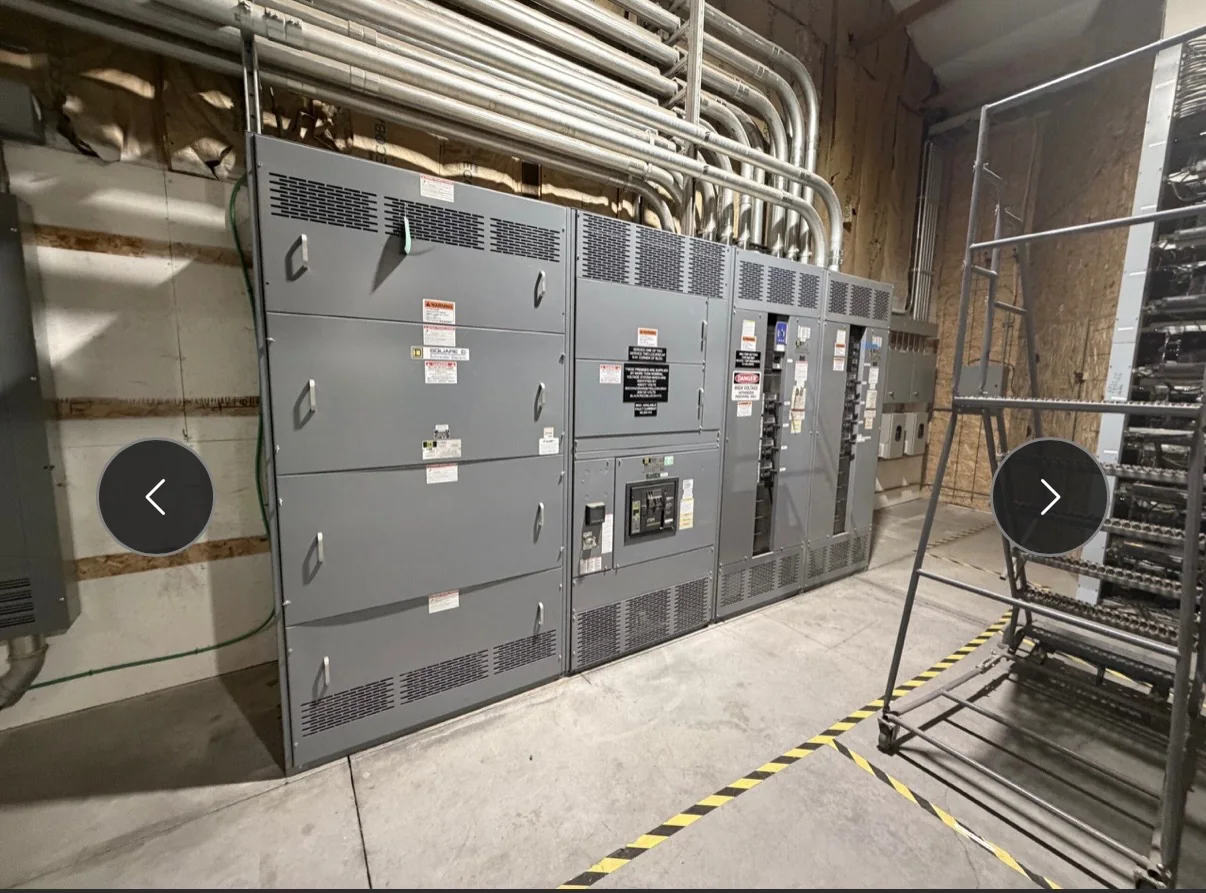
Start with the production load profile
Manufacturing demand is shaped by more than a facility’s total connected load. Motors, compressors, process heaters, welding equipment, variable-frequency drives and other machinery can create different operating patterns, starting currents, harmonics or power-quality concerns. Document which loads run continuously, which start together, and which are intermittent or expected to expand. Include nameplate data where available, operating schedules, voltage and phase requirements, and any known starting or drive characteristics. This information helps the project team assess service and feeder distribution rather than sizing around a single aggregate number. Distinguish essential production equipment from loads that can be shed or restarted after an interruption. Qualified electrical professionals should establish demand assumptions, protection and required ratings using project conditions and applicable codes. A realistic load profile gives the switchboard design a sound basis and helps identify where additional analysis or coordination is needed before equipment is specified.
Choose a distribution arrangement that supports uptime
The way power is divided among production areas affects both operational resilience and troubleshooting. A facility may use separate feeders for lines, process areas, utilities or support loads, but the right arrangement depends on the one-line diagram, service configuration, fault-current conditions and operating priorities. Grouping circuits can simplify initial construction, while separating critical processes may make isolation and maintenance more manageable. Neither approach guarantees uninterrupted production; the team must consider upstream supply, protective-device coordination, switching procedures and the consequences of losing each section. Discuss how operators need to identify circuits, isolate equipment and restore power after work or a fault. Clear circuit naming, consistent documentation and accessible drawings matter in a busy plant where equipment changes over time. Compare distribution choices with the owner’s maintenance practices and production sequence, and verify that the selected arrangement fits the electrical system and the applicable requirements for the specific equipment.
| System | Voltage, phase, current and available fault current |
|---|---|
| Configuration | Lineup, protection, controls and enclosure as specified |
| Compliance | Applicable standards and listing confirmed for the assembly |
| Delivery | California and nationwide; schedule confirmed by quote |
Coordinate protection with machinery and upstream equipment
Protective devices must be evaluated as part of the complete electrical system, not selected from load current alone. Available fault current, conductor characteristics, upstream protection, equipment duty and coordination objectives all influence device selection and settings. A plant may prioritize selective coordination for certain loads so a fault is more likely to disconnect only the affected portion, but achieving that objective depends on the full system and may involve tradeoffs in device choices or settings. Motor starting and drive behavior also deserve review: equipment that draws elevated current during startup can affect protection decisions and voltage performance. Provide current one-line diagrams, source and transformer information, conductor details, preliminary fault-current data and relevant motor or drive schedules when available. A qualified engineer should confirm calculations, protective settings, arc-flash considerations, applicable codes and required equipment ratings. These checks help align switchboard requirements with real system conditions before procurement and installation planning.
Reserve useful capacity for staged line changes
Manufacturing upgrades are often phased to keep existing operations running while new machinery or production lines are installed. Planning for that sequence means looking beyond nominal spare space: future work may require additional feeder capacity, bus capacity, enclosure space, connection provisions or changes to the upstream service. Identify likely additions, their estimated loads, voltage and anticipated phase, even if final machine selections are not complete. Separate known near-term work from longer-range possibilities, and ask the design team to evaluate which provisions can be incorporated now and which would require a later equipment modification. Reserved space or capacity should not be treated as a promise that any future load can be added without engineering review. Confirm how proposed stages affect demand, fault-current levels, protection and shutdown windows. A documented growth plan can reduce avoidable rework, but each change still needs verification against the installed system and applicable requirements.
Plan installation, maintenance and procurement together
The switchboard selection is only one part of a successful plant project. Confirm the electrical room layout, access and working clearances, cable entry, conduit routes, environmental conditions and any handling constraints before finalizing requirements. Coordinate outages and tie-in sequencing with production managers, contractors and the utility or other upstream parties as applicable; schedule-sensitive or expedited options can be reviewed for a specific project, but timing depends on scope and engineering review. For a quotation, share the one-line diagram, load information, desired distribution arrangement, applicable equipment standards, site constraints and target project milestones. Identify which details are preliminary so open items can be resolved efficiently. Switchgear Builder California builds new equipment in the USA with American components and supplies customers in California and nationwide, subject to project review. Ask the project team to confirm scope, design inputs and shipment considerations before committing to a plan. The result is a more useful basis for procurement, installation coordination and future plant changes.