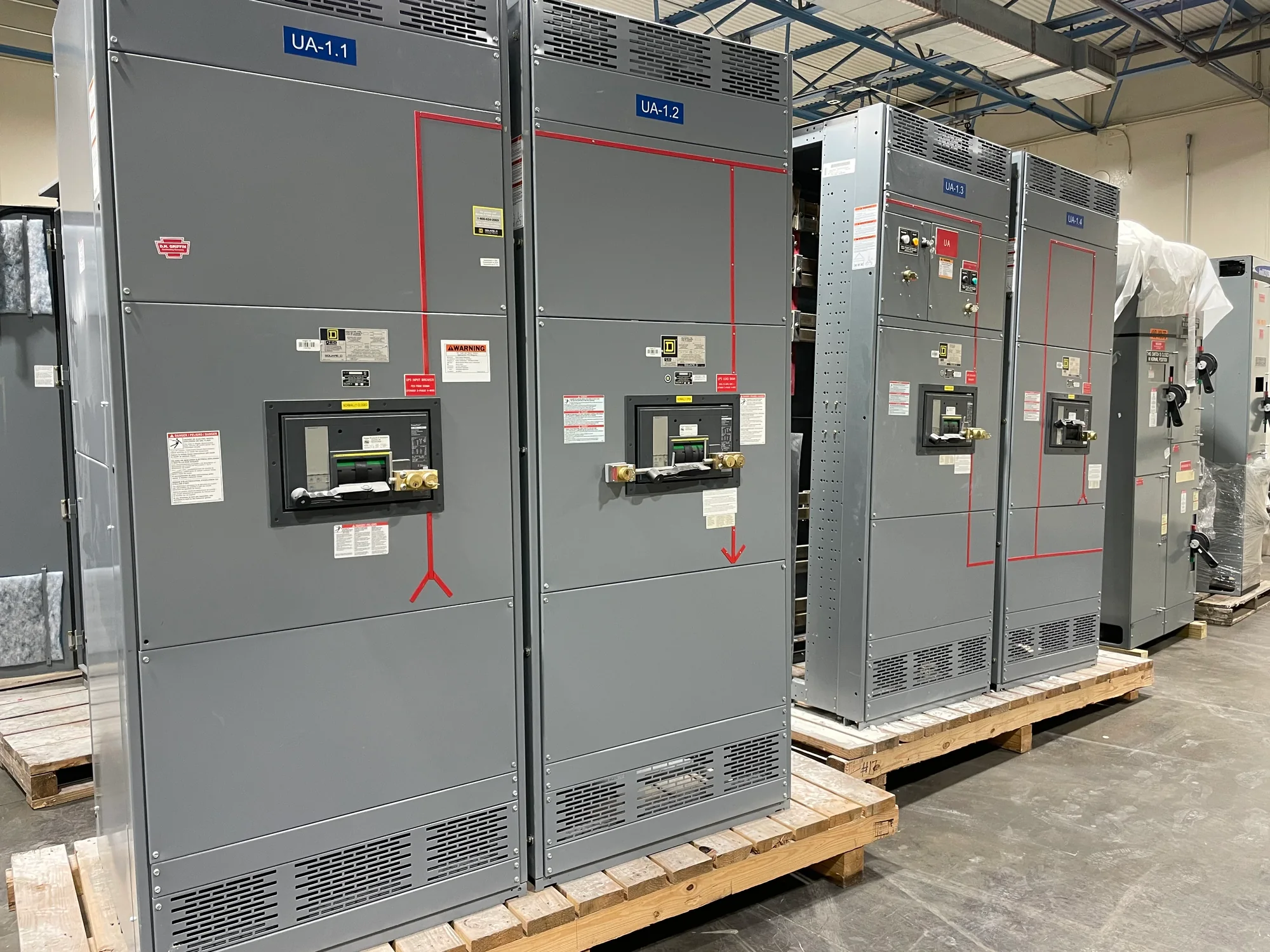
Start with the load, not the spare space
An unused feeder position is not proof that a switchgear lineup can serve another production machine. First establish the new equipment’s electrical demand from its documentation, including voltage, phase, full-load current, starting or inrush characteristics, operating duty and any expected future growth. Compare that demand with the existing system’s available capacity and operating conditions, rather than relying on nameplate space alone. Consider what else may run at the same time, how production schedules affect coincident loads, and whether process changes could increase demand later. A qualified electrical professional should review the source, bus and feeder ratings, interrupting requirements, grounding arrangement and applicable codes for the specific installation. If the existing switchgear information is incomplete, gather field observations and available drawings before committing to a design. A clear load basis helps distinguish a feeder addition from a broader distribution upgrade and reduces late changes.
Verify feeder capacity and protection coordination
Assess each candidate feeder against both the new load and the conditions upstream and downstream. Confirm conductor sizes and installation method, breaker or fuse characteristics, available fault current, equipment ratings, and the settings or curves needed to coordinate with upstream protective devices. Motor starting, variable-frequency drives, transformers and sensitive controls can affect how protection should respond; one device setting may not suit every operating mode. Review existing one-line diagrams and protective-device studies, then verify that they reflect field conditions. Where information is missing or system changes are proposed, have qualified professionals perform the appropriate calculations and coordination review. The goal is dependable fault clearing while avoiding unnecessary interruption to unaffected production—not simply selecting a larger protective device. Identify whether existing feeder spaces, bus capacity or upstream equipment require modification, and document assumptions that still need confirmation. This evidence gives the project team a practical basis for deciding whether spare capacity is usable.
| System | Voltage, phase, current and available fault current |
|---|---|
| Configuration | Lineup, protection, controls and enclosure as specified |
| Compliance | Applicable standards and listing confirmed for the assembly |
| Delivery | California and nationwide; schedule confirmed by quote |
Plan around production and installation access
Manufacturing expansion often has a narrow installation window: a planned shutdown, a phased line conversion or a period when a particular machine is not required. Map the proposed electrical work against production commitments, equipment delivery, rigging access and the availability of qualified installation personnel. Determine whether existing switchgear can remain energized during preparatory work and which steps require isolation; only authorized, qualified professionals should establish and follow the project’s safe work procedures. Review clearances, cable routes, working space and access for handling new equipment before finalizing the layout. If work must occur in stages, identify temporary operating arrangements and the limits on production during each stage. Schedule-sensitive or expedited equipment options may be considered after review of design scope, documentation and project constraints, but timing should not be assumed. Early coordination among the owner, electrical contractor, equipment supplier and controls team helps surface conflicts before a shutdown date becomes difficult to change.
Sequence commissioning before startup
Build commissioning into the expansion plan rather than treating it as the final day before production. Establish the sequence from installation inspection through verification of connections, protective-device settings, control interfaces and grounding, followed by approved testing and energization steps. The exact checks depend on the equipment, system design, project specifications and applicable requirements; qualified professionals determine the safe procedures and acceptance criteria. Coordinate switchgear work with the machine manufacturer’s startup needs, including control power, interlocks, motor rotation, drive configuration and communication signals. Decide who owns each test, what records will be retained, and how discrepancies will be resolved before the production team is asked to rely on the added capacity. Where a phased startup is planned, define prerequisites and hold points for each phase so one incomplete interface does not expose other equipment to avoidable disruption. A written sequence also helps align outage duration, commissioning resources and production restart decisions.
Prepare a complete scope for new switchgear
When expansion requires new switchgear or a replacement assembly, provide the manufacturer with the project one-line diagram, system voltage and frequency, source and fault-current information, load schedule, feeder requirements, operating sequence, physical constraints and relevant specifications. Include existing equipment data and photographs where useful, while identifying uncertain or field-verified details. State the intended commissioning phases and any production-window constraints so design decisions can be evaluated against the real installation plan. Requirements such as ratings, enclosure, controls, protective devices and applicable standards must be confirmed for the particular equipment and project; for medium- or high-voltage equipment, identify the standards relevant to that specific application. Switchgear Builder California builds new switchgear in the USA with American components and supplies customers in California and nationwide, with project scope and shipping reviewed individually. A focused scope review can identify missing engineering inputs, clarify interfaces and help the contractor plan installation and startup without assuming that an existing spare position settles capacity.